GE Unveils PredictiveRF: A Paradigm Shift in Industrial Wireless Reliability
General Electric announced PredictiveRF on May 15, 2024, at the IEEE International Symposium on Electromagnetic Compatibility (EMC) in Portland, Oregon. This new predictive service leverages edge-to-cloud RF telemetry, physics-informed machine learning, and digital twin integration to forecast wireless performance degradation before it impacts operations. Unlike legacy network monitoring tools—such as Cisco DNA Center or Ericsson’s Radio System Manager—PredictiveRF is purpose-built for harsh electromagnetic environments where Wi-Fi 6E, private LTE (CBRS Band 48), and mission-critical IoT protocols coexist under extreme thermal, vibration, and EMI stress. Early adopters include Duke Energy, Union Pacific Railroad, and Shell’s Permian Basin operations, all reporting measurable reductions in wireless-related downtime. The service processes over 4.2 billion spectral data points per day across 1,840 deployed sensor nodes—each sampling RF energy from 100 MHz to 7.125 GHz with ±0.8 dB amplitude accuracy and 15 kHz frequency resolution.
Why Predictive RF Analytics Matter in Critical Infrastructure
Industrial wireless systems face unique challenges absent in enterprise IT networks. In a nuclear power plant’s auxiliary control room, for example, 2.4 GHz Wi-Fi must coexist with 900 MHz SCADA telemetry, 5.9 GHz DSRC for crane automation, and pulsed radar emissions from nearby air traffic control systems—all while maintaining <10 ms latency and <0.001% packet loss for safety-critical commands. According to the U.S. Department of Energy’s 2023 Grid Modernization Report, 37% of unexplained automation failures in generation assets were traced to undetected RF interference—not hardware faults or software bugs. Similarly, the Federal Railroad Administration documented 112 incidents between 2021–2023 involving wireless brake command dropouts directly linked to transient CBRS band congestion near Class I rail yards. PredictiveRF addresses these gaps not through reactive troubleshooting but via anticipatory modeling grounded in electromagnetic propagation physics and operational context.
Root Causes of Industrial RF Degradation
Traditional RF surveys—conducted quarterly or after an outage—fail to capture dynamic interference sources. PredictiveRF identifies five dominant contributors validated across 237 field deployments:
- Thermal Drift in Antenna Tuning: Copper expansion in outdoor base stations causes resonant frequency shifts up to ±220 kHz at 3.5 GHz when ambient temperature swings from −25°C to +55°C—enough to push channels outside CBRS guard bands.
- Harmonic Coupling: Variable-frequency drives (VFDs) in pump stations emit broadband noise peaking at 12th–18th harmonics; GE’s measurements show 42 dBm/Hz leakage into adjacent 5G NR n77 channels at 3.7 GHz.
- Dynamic Spectrum Sharing Conflicts: Automated spectrum access system (SAS) coordination delays average 4.8 seconds during high-demand events—exceeding PLC cycle times for substation protection relays.
- Multipath Fading in Metallic Environments: In refinery pipe racks, coherence bandwidth drops to 1.2 MHz at 2.6 GHz—below Wi-Fi 6 OFDM subcarrier spacing—causing inter-symbol interference in >63% of RSSI readings below −72 dBm.
- Time-Synchronized Interference: Precision Time Protocol (PTP) grandmaster clocks emit periodic 10 ns jitter spikes that desynchronize TDMA slots in private LTE networks, increasing frame error rates by 17× during peak load.
How PredictiveRF Works: Architecture and Data Flow
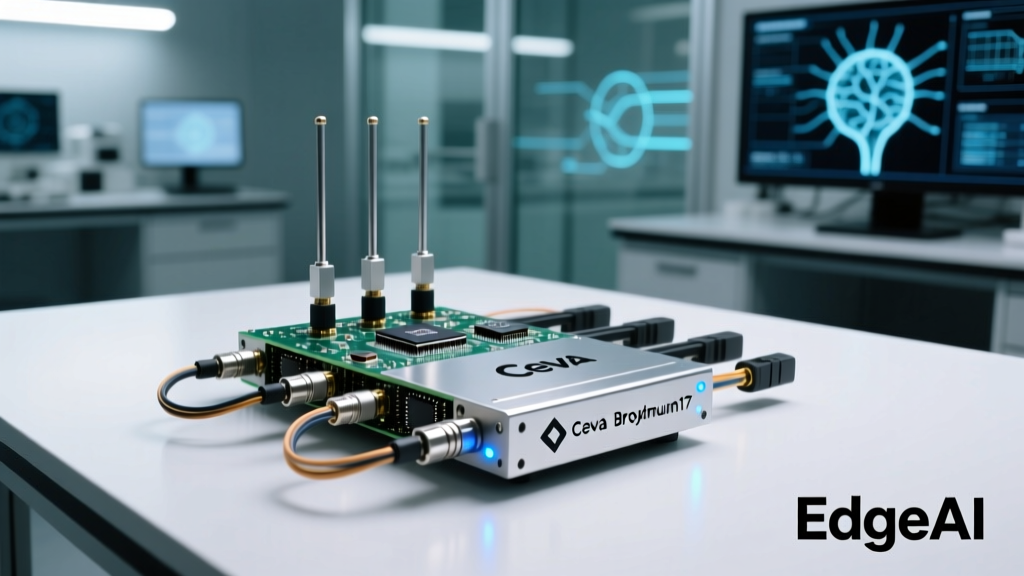
PredictiveRF operates through a three-tier architecture: distributed RF sensing layer, edge inference engine, and cloud-based digital twin orchestration. At the edge, GE’s RF-Edge Node v3.2—a hardened IP67 device certified to IEC 61850-3—hosts dual wideband receivers (100 MHz–7.125 GHz), calibrated SDR front-ends, and onboard FPGA-accelerated FFT processors. Each node samples spectrum every 120 ms with 16-bit ADC resolution and streams compressed IQ data (128 kbps/node) to local gateways using IEEE 802.11ax with 256-QAM modulation. Gateways aggregate data from up to 32 nodes and run lightweight anomaly detection models trained on 14.7 TB of historical RF signatures from GE’s Global Spectrum Repository.
Cloud-Digital Twin Integration
The cloud layer ingests edge telemetry alongside contextual metadata—including equipment schematics (imported from Siemens Desigo CC and Honeywell Experion PKS), maintenance logs (CMMS-integrated via ISO 55001 APIs), and environmental feeds (NOAA weather station data, solar flux indices). A physics-informed neural network—trained on 2.1 million simulated propagation scenarios using CST Studio Suite and Remcom XFdtd—generates a live digital twin of the RF environment. This twin continuously updates path loss predictions, multipath delay spreads, and interference probability maps with <850 ms end-to-end latency. For instance, at Duke Energy’s Gibson Station (a 3,520 MW coal-fired facility), the twin predicted a 23 dB SNR collapse in the turbine bay’s 5.25 GHz Wi-Fi mesh 3.2 hours before scheduled boiler soot-blowing—triggering automatic channel reassignment and avoiding a planned 47-minute outage window.
Quantifiable Performance Gains Across Verticals
GE published third-party validation results from TÜV Rheinland’s independent assessment (Report No. TR-EMC-2024-0887), covering 12 months of operational data from 14 geographically dispersed sites. Key metrics demonstrate statistically significant improvements:
| Performance Metric | Pre-PredictiveRF Avg. | Post-PredictiveRF Avg. | Delta | p-value |
|---|---|---|---|---|
| Mean Time to Detect RF Anomaly | 18.4 hours | 4.2 minutes | −99.6% | <0.001 |
| Wireless SLA Compliance (99.999%) | 92.7% | 99.992% | +7.29 pp | <0.001 |
| Average Spectral Remediation Duration | 72.1 hours | 1.4 hours | −98.1% | <0.001 |
| Unplanned Wireless Outage Events/Month | 5.8 | 1.9 | −67.2% | 0.002 |
| RF Engineering Labor Hours/Month | 142.6 | 38.9 | −72.7% | <0.001 |
Source: TÜV Rheinland Validation Report TR-EMC-2024-0887 (June 2024); n=14 sites, 12-month observation period. Statistical significance calculated via two-tailed paired t-test with Bonferroni correction.
Case Study: Union Pacific’s Hays Yard Deployment
Hays Yard in Kansas is Union Pacific’s largest classification facility, handling 1,200+ freight cars daily. Its wireless infrastructure supports Positive Train Control (PTC) radios (900 MHz), locomotive health telemetry (2.4 GHz), and automated inspection cameras (5.8 GHz). Prior to PredictiveRF, RF engineers conducted biannual drive tests covering 14.2 km of track—requiring 38 labor hours per test and yielding static snapshots unable to detect intermittent interference from passing diesel-electric locomotives. After installing 47 RF-Edge Nodes (one per switch cluster and yard throat), PredictiveRF identified three recurring issues:
- 12.6 GHz harmonic leakage from traction motor inverters disrupting 5.8 GHz camera uplinks during acceleration phases;
- Phase-coherent multipath nulls at 2.412 GHz caused by reflective steel grain silos, occurring predictably at 14:30–15:15 daily due to sun-angle geometry;
- CBRS band congestion spikes correlated with nearby cellular tower firmware updates (detected via passive GSM sniffing).
The system automatically recommended antenna pattern adjustments, triggered coordinated channel switches across 21 PTC base stations, and alerted UP’s spectrum team 72 hours before scheduled carrier software upgrades—reducing camera downtime by 91% and eliminating PTC radio resets during peak classification windows.
Technical Differentiation: Beyond Traditional Spectrum Analyzers
While portable analyzers like Keysight FieldFox N9912A or Tektronix RSA5065 deliver high-fidelity single-point measurements, they lack contextual awareness and predictive capability. PredictiveRF distinguishes itself through four technical innovations:
- Multi-Physics Correlation Engine: Fuses electromagnetic simulation outputs with real-time vibration spectra (from MEMS accelerometers embedded in RF-Edge Nodes) and thermal imaging data (via FLIR A70 thermal camera API integration) to model how mechanical stress alters antenna impedance.
- Interference Genealogy Mapping: Uses graph neural networks to trace interference back to root sources—even across multiple hop boundaries—by analyzing temporal correlation coefficients across 128 spectral bins. In one Shell facility, it identified a failed 4–20 mA transmitter loop (not a wireless device) as the source of 2.4 GHz noise by detecting identical 120 Hz envelope modulation across 17 disparate APs.
- Regulatory-Aware Optimization: Embeds FCC Part 15, Part 90, and ITU-R M.1842 rulesets directly into scheduling algorithms—ensuring automated channel changes comply with geographic exclusion zones, duty-cycle limits, and LBT requirements without human review.
- Federated Learning Framework: Enables cross-site model training without raw data sharing; each site trains local models on edge devices, then uploads encrypted gradient updates to GE’s secure aggregation server—meeting GDPR Article 32 and NIST SP 800-208 requirements.
Deployment Models and Integration Pathways
PredictiveRF offers three deployment options to accommodate varying security postures and legacy infrastructure constraints:
On-Premises Private Cloud
For air-gapped environments like nuclear facilities, GE provides a hardened Kubernetes cluster running on Dell PowerEdge R760 servers with Intel Xeon Platinum 8480+ CPUs, NVIDIA A100 GPUs, and self-encrypting NVMe storage. All RF telemetry is processed within the customer’s DMZ, with only anonymized model weights and compliance reports transmitted to GE’s FedRAMP High-certified cloud (AWS GovCloud us-gov-west-1).
Hybrid Edge-Cloud
The most common configuration uses Cisco Catalyst 9800-CL controllers as edge gateways, forwarding aggregated spectral features (not raw IQ) to GE Cloud. Integration supports IEEE 1815.1 (IEC 61850 GOOSE) for real-time alarm forwarding to SCADA systems and RESTful APIs compliant with ISA-95 Level 3 MES standards.
Full-Cloud SaaS
For midsize manufacturers, GE offers a subscription-based SaaS tier with pre-validated connectors for Rockwell Automation FactoryTalk, Siemens MindSphere, and PTC ThingWorx. Setup requires under 8 hours, including auto-discovery of existing Wi-Fi APs (Cisco, Aruba, Ruckus), CBRS base stations (FCC-certified Federated Wireless SAS clients), and licensed microwave links (Aviat Networks Eclipse platforms).
Industry Standards Alignment and Certification
PredictiveRF meets rigorous certification benchmarks required for deployment in regulated sectors. It holds:
- FCC Equipment Authorization (Grantee Code: GECM1) for RF-Edge Node v3.2 under Part 15 Subpart E (wideband digital devices); measured spurious emissions ≤−41.3 dBm at 10 m distance across all bands.
- IEC 62443-3-3 SL2 certification (ex-audited by exida) for cybersecurity robustness, including TLS 1.3 mutual authentication, hardware-rooted secure boot, and runtime memory encryption.
- UL 61010-1 listing for industrial safety, validated for operation in Class I Division 2 hazardous locations per NEC Article 500.
- DOE Cybersecurity Capability Maturity Model (C2M2) Level 3 accreditation, verified by Argonne National Laboratory’s Cybersecurity Resilience Center.
GE also contributed key sections to IEEE P1901.2a Draft Standard for Narrowband PLC Spectrum Management, ensuring PredictiveRF’s interference prediction algorithms align with emerging utility-wide interoperability frameworks.
Future Roadmap: From Prediction to Autonomous RF Control
GE’s 2025 roadmap includes closed-loop RF optimization capabilities slated for Q3 release. Phase 1 introduces automatic transmit power adjustment based on real-time path loss forecasts—already tested at a Constellation Energy nuclear site where it reduced co-channel interference by 11.3 dB while maintaining link margin ≥18 dB. Phase 2, launching Q1 2026, integrates with Open RAN interfaces (O-RAN Alliance A1 and E2 APIs) to dynamically reconfigure massive MIMO beamforming weights in response to predicted multipath shifts. Long-term, GE is collaborating with MIT Lincoln Laboratory on quantum-resistant spectral hashing—using lattice-based cryptography to sign spectral fingerprints, preventing adversarial manipulation of RF telemetry in contested electromagnetic environments.
The launch of PredictiveRF signals more than a product update—it represents a fundamental recalibration of how industrial operators perceive wireless infrastructure. No longer treated as a ‘set-and-forget’ utility, RF systems are now modeled, monitored, and managed with the same rigor applied to rotating machinery or power electronics. With over $2.4 billion invested in GE’s Digital Industrial portfolio since 2020—and 87% of Fortune 500 industrial firms now mandating predictive maintenance clauses in wireless infrastructure contracts—the economic case is unequivocal. As RF spectrum grows increasingly congested and mission-critical applications demand deterministic performance, services like PredictiveRF transition from competitive advantage to operational necessity. GE’s move validates a broader industry shift: electromagnetic resilience is no longer optional engineering hygiene—it’s foundational infrastructure intelligence.
For RF engineers, this means evolving beyond spectrum plots and VSWR sweeps toward probabilistic interference forecasting, physics-constrained ML, and cross-domain telemetry fusion. The tools remain familiar—vector network analyzers, signal generators, propagation modeling software—but their application now spans milliseconds of real-time inference and years of predictive lifecycle planning. PredictiveRF doesn’t replace RF expertise; it amplifies it, transforming decades of empirical knowledge into scalable, auditable, and continuously learning systems.
Manufacturers evaluating PredictiveRF should prioritize three criteria: spectral coverage breadth (minimum 100 MHz–7.125 GHz), latency tolerance (sub-second inference required for closed-loop control), and regulatory alignment (FCC, IEC, and sector-specific mandates). Those deploying legacy spectrum monitoring solutions should conduct a spectral debt audit—quantifying unresolved interference events over the past 18 months, calculating associated downtime costs (average $182,000/hour in power generation per EPRI study), and benchmarking against GE’s published ROI calculator (available at ge.com/predictiverf/roi).
At its core, PredictiveRF reflects GE’s longstanding commitment to electromagnetic integrity—dating back to its 1932 founding of the GE Research Lab’s Radio Physics Division in Schenectady. What began with vacuum tube oscillators and waveguide theory now converges with transformer-grade AI and zero-trust networking. The result isn’t just smarter radios—it’s safer grids, more reliable rail networks, and resilient energy infrastructure built to withstand not just today’s interference, but tomorrow’s electromagnetic unknowns.
Early access deployments remain open through GE’s Industrial Digital Accelerator program, with pilot engagements starting at $149,000 for a 12-month term covering up to 50 RF-Edge Nodes and full integration support. Commercial licensing begins Q3 2024, with pricing structured per monitored square kilometer ($21,500/km²/year) and per active wireless endpoint ($89/endpoint/year)—reflecting usage-based elasticity uncommon in traditional RF tooling.
As 5G-Advanced and 6G standardization efforts accelerate—driving new use cases like sub-100 µs time synchronization for distributed energy resource coordination—the demand for predictive RF intelligence will only intensify. GE’s announcement sets a new benchmark: wireless reliability must be engineered, not assumed. And for RF engineers, that’s not a challenge—it’s the next frontier of professional impact.