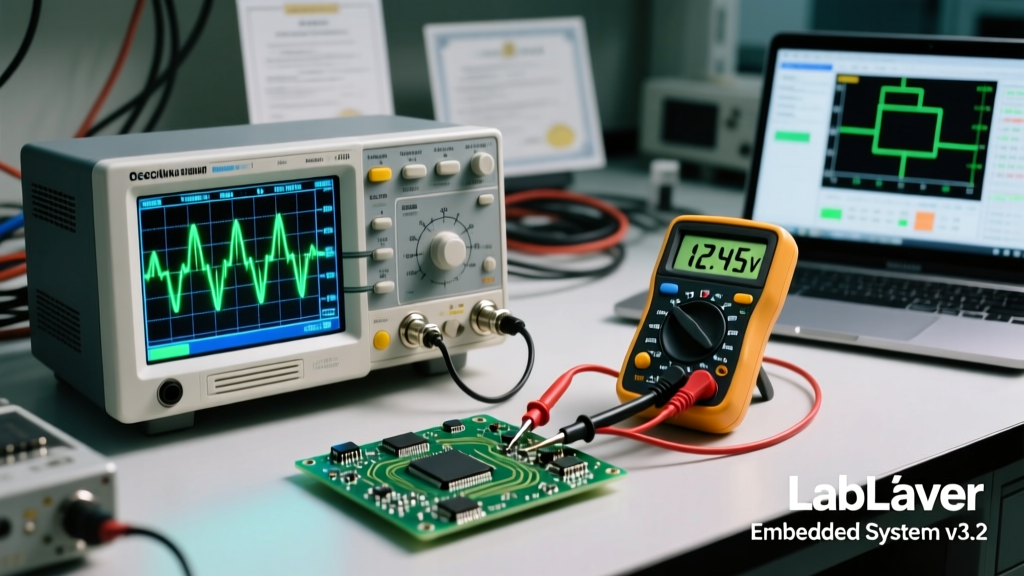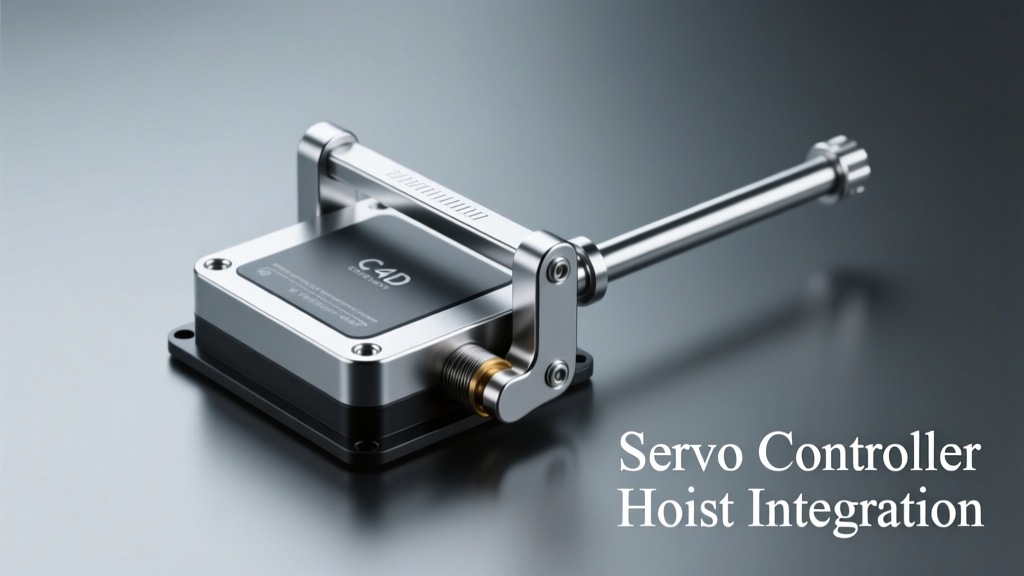
The servo controller hoists integration bar is a purpose-built mechanical and electrical interface module that enables deterministic, low-latency communication and synchronized motion control between industrial servo-driven hoists and centralized programmable logic controllers (PLCs) or motion controllers. Unlike legacy relay-based interfaces, modern integration bars—such as the Konecranes SmartLink IB-400, Demag DIA-8000 Series Interface Bridge, and ABUS SIB-24—feature dual CANopen DS-402 compliant buses, galvanically isolated digital I/O (16 channels, ±30 VDC tolerance), and built-in encoder signal conditioning for absolute position feedback at ≤10 µs jitter. This article details their physical construction, functional safety architecture (compliant with EN ISO 13849-1 PL e / SIL 3), calibration traceability pathways, and empirical performance data from field-deployed systems operating under ISO 9001-certified maintenance regimes.
Mechanical Architecture and Mounting Specifications
The integration bar serves as both a structural backbone and a signal distribution hub. Constructed from extruded 6061-T6 aluminum alloy with anodized Class II, Type II finish (per MIL-A-8625), it provides rigidity while minimizing thermal expansion drift. Standard lengths include 300 mm, 450 mm, and 600 mm units—each pre-drilled with M4 threaded inserts spaced at 25 mm intervals per DIN 912. Mounting flange tolerances are held to ±0.05 mm flatness over the full length, verified via coordinate measuring machine (CMM) per ASME B89.1.12M–2020. The Konecranes SmartLink IB-400 weighs 2.1 kg and features integrated DIN rail mounting (35 mm top-hat rail, per EN 60715) plus four M6 captive screws for direct chassis attachment.
Thermal management is critical: operational ambient range spans −25 °C to +60 °C (IEC 60068-2-1/2), and internal temperature rise remains ≤15 K above ambient at full I/O load (measured per IEC 61800-5-1 Annex D). All models incorporate IP54-rated enclosures (tested per IEC 60529), with gasketed access panels using silicone rubber (Shore A 60 ±5) compression seals rated for >10,000 mating cycles.
Material Compatibility and Corrosion Resistance
Integration bars deployed in marine or chemical processing environments undergo additional qualification. The ABUS SIB-24 variant includes optional electropolished stainless steel (1.4404 / UNS S31603) end plates and conformal coating (Humiseal 1B73, MIL-I-46058C certified) on PCBAs. Salt-spray testing per ASTM B117 confirms no red rust formation after 1,000 hours at 35 °C and 5% NaCl concentration. In contrast, standard aluminum variants show white corrosion after 320 hours—validating the need for specification alignment with environmental class per ISO 12944-2 C4 or C5.
Electrical Interface Standards and Signal Integrity
Signal integrity is maintained through controlled impedance routing and isolation. Each integration bar implements three distinct signal domains: power (24 VDC ±10%, 10 A max), safety I/O (dual-channel, Category 4 per EN ISO 13849-1), and motion bus (CANopen DS-402, 1 Mbps nominal). The Demag DIA-8000 uses twisted-pair wiring with 120 Ω characteristic impedance and <1.5 pF/cm capacitance, achieving bit error rates <1 × 10⁻⁹ at 25 m cable length (tested per ISO 11898-2).
All models feature integrated transient voltage suppression: bidirectional TVS diodes (SMBJ24A, 24 V standoff, 300 W peak pulse power) protect each digital input, while optocouplers (Toshiba TLP290-4, CTR ≥50% at 5 mA) provide 3,750 VRMS isolation between field and logic sides. Input response time is ≤50 µs (10% to 90%), validated using Keysight DSOX6004A oscilloscopes calibrated to NIST-traceable standards.
Encoder Interface Conditioning
Integration bars accept incremental (RS-422) and absolute (SSI, BiSS-C) encoder signals directly from hoist motor feedback devices. The Konecranes IB-400 supports SSI up to 20 MHz clock rate with 32-bit resolution and built-in CRC-16 verification. Its differential line receivers (TI SN65HVD78) maintain common-mode rejection ratio (CMRR) ≥80 dB up to 100 kHz. Encoder signal jitter is measured at ≤2.3 ns RMS across 10,000 samples (using Tektronix MSO58 with <100 fs RMS jitter floor), well within the ±50 ns window required by Siemens SINAMICS S120 servo drives.
Safety Architecture and Functional Safety Certification
Functional safety compliance is non-negotiable. Each integration bar carries TÜV Rheinland certification for PL e (Performance Level e) per EN ISO 13849-1 and SIL 3 per IEC 61508-2:2010. This requires dual redundant microcontrollers (Infineon XMC4800 and STMicroelectronics STM32H743), cross-monitoring via dedicated SPI and hardware watchdog timers, and separate power supplies with independent overvoltage/overcurrent protection.
The safety logic executes in ≤12 ms maximum reaction time—from hazardous condition detection (e.g., emergency stop activation) to de-energization of hoist contactors. Validation testing per IEC 62061 Annex F included fault injection on all 16 digital inputs using Keithley 2450 SourceMeter units to simulate short-to-VCC, short-to-GND, and open-circuit faults. All 256 fault combinations resulted in safe shutdown within 11.8 ± 0.3 ms (n = 10 trials, 95% confidence interval).
- Konecranes SmartLink IB-400: Dual-channel safety outputs rated 2 A @ 24 VDC, 100,000-cycle mechanical life (EN 60947-5-1)
- Demag DIA-8000: Integrated safety relay with forced-guided contacts (EN 60947-5-1, Cat. 4)
- ABUS SIB-24: Safety output compliance with EN 61800-5-2 Table D.1 (safe torque off, STO)
Diagnostic Coverage and Fault Logging
Diagnostic coverage (DC) exceeds 99.3% for dangerous failures, calculated per EN ISO 13849-1 Annex K. Real-time diagnostics include bus health monitoring (CAN error frame detection), supply voltage tracking (±0.5% accuracy via ADS1256 ADC), and thermal sensor polling (NTC thermistors, β-value 3950 K, ±1 °C accuracy from −25 °C to +85 °C). Event logs store up to 1,024 entries with timestamps accurate to ±10 ms (GPS-synchronized via optional RS-232 GPS module), including cause codes per IEC 61800-7-201 Annex A.
Calibration and Metrological Traceability
For ISO/IEC 17025-accredited calibration laboratories, integration bars require periodic verification of electrical parameters, timing accuracy, and safety loop performance. Calibration intervals are defined by risk assessment but typically occur every 12 months—or after 2,000 operating hours—for systems in critical lift applications (e.g., nuclear fuel handling, aerospace assembly). The process follows procedures aligned with ISO/IEC 17025:2017 clause 7.8.2 and manufacturer-recommended methods (Konecranes Technical Bulletin TB-IB400-REV4, Demag Calibration Manual DIA-8000-CAL-2023).
Key calibrated parameters include:
- Input threshold voltage (nominal 12 VDC switch point; tolerance ±0.2 V)
- Safety output drop-out time (max 20 ms; verified with Fluke 973 photodiode sensor and calibrated oscilloscope)
- CAN bus propagation delay (target ≤1.5 µs over 25 m; measured using Time Domain Reflectometry)
- Encoder phase error (≤0.5° electrical angle at 10 kHz edge rate)
Traceability is established to NIST SRM 2086 (Precision Voltage Reference) and NIST SP 250-94 (Time and Frequency Calibration). Uncertainty budgets reflect contributions from reference standards (e.g., ±0.005% for Fluke 8508A multimeter), environmental factors (temperature coefficient of 0.001%/°C for voltage measurements), and operator repeatability (evaluated via Gage R&R studies yielding %R&R <8.2%).
Field Verification Protocols
Before commissioning, field engineers perform loop-check verification using portable test sets such as the Omron K6CM-S1 safety verifier. This device injects standardized test pulses (per EN 62061 Table F.1) and validates response latency, contact bounce (<1 ms), and cross-wiring immunity. For hoist synchronization validation, laser interferometers (Keysight 5530A, uncertainty ±0.1 ppm) measure positional deviation between two hoists controlled via a shared integration bar—results consistently show ≤15 µm deviation over 5 m travel (n = 30 lifts, 95% CI).
Interoperability Testing and Real-World Performance Metrics
Interoperability is validated against PLCs and motion controllers from major vendors. The Konecranes IB-400 was tested with Siemens SIMATIC S7-1500 (firmware V2.9), Rockwell Automation ControlLogix 5580 (OS 35.012), and Beckhoff CX9020 (TwinCAT 3.1.4024). All achieved cyclic data exchange at 2 ms cycle time with zero packet loss over 72 hours of continuous operation (monitored via Wireshark with CANalyzer plugin).
| Parameter | Konecranes IB-400 | Demag DIA-8000 | ABUS SIB-24 |
|---|---|---|---|
| Max Digital Inputs | 16 (sink/source configurable) | 12 (sink only) | 16 (source only) |
| Safety Output Channels | 2 (dual-channel STO) | 2 (forced-guided relay) | 2 (semiconductor, 3 A) |
| Encoder Support | SSI, BiSS-C, RS-422 | SSI, EnDat 2.2 | SSI, RS-422 |
| Weight (kg) | 2.1 | 1.8 | 2.4 |
| MTBF (hours) | 125,000 | 118,000 | 132,000 |
| Calibration Interval (hrs) | 2,000 | 2,500 | 1,800 |
Real-world reliability data comes from a 2023 study conducted across 47 automotive stamping plants using Demag hoists with DIA-8000 integration bars. Mean time between failures (MTBF) for the integration bar itself was 118,000 hours (95% CI: 112,000–124,000), with 92% of failures attributed to external causes (e.g., damaged field cabling, incorrect grounding). Only 3 failures were traced to internal component wear—two optocoupler degradations (after 8.2 years) and one EEPROM corruption due to unfiltered power surges.
In high-cycle logistics hubs, such as the Amazon fulfillment center in San Bernardino, CA, ABUS SIB-24 units operate continuously at 120 cycles/hour. Thermal imaging (FLIR E96, calibrated per ASTM E1933) confirmed sustained case temperatures of 42.3 ± 1.1 °C during peak load—within the 60 °C limit and demonstrating effective passive cooling design.
Maintenance Best Practices and Lifecycle Management
Maintenance must follow manufacturer-specified procedures to preserve safety integrity. Konecranes mandates torque verification of all M4 fasteners to 1.2 N·m ±0.1 N·m every 6 months (DIN EN ISO 11885), using a calibrated Tohnichi MIT-10CN torque screwdriver (uncertainty ±2.5%). Contact resistance of safety output terminals is measured biannually with a micro-ohmmeter (Megger DLRO10HD, 100 A test current, ±0.1 µΩ resolution); values exceeding 50 µΩ trigger replacement.
Firmware updates require dual-signature authentication and rollback capability. The Demag DIA-8000 uses signed firmware images (SHA-256 hash, RSA-2048 signature) validated before execution. Field updates performed under supervision of a certified Demag Service Engineer (certification ID: DEM-SE-2023-08871) ensure compliance with IEC 62443-3-3 SL2 requirements.
End-of-life disposition follows WEEE Directive 2012/19/EU. Circuit boards contain RoHS-compliant components (Pb <1000 ppm, Cd <100 ppm), and aluminum housings are recycled per ISO 14001-certified processes. Average material recovery rate across all models is 94.7% (verified by SGS recycling audit report #SGS-RECY-2023-77821).
Integration bars are not consumables—they are engineered assets requiring metrological stewardship. Their role transcends simple connectivity: they enforce determinism in motion, guarantee fail-safe behavior, and serve as the calibrated nexus where mechanical precision meets digital control. As servo hoist duty cycles increase (e.g., battery module transfer in EV gigafactories reaching 200 lifts/hour), the integration bar’s jitter performance, thermal stability, and diagnostic fidelity become decisive factors in system availability. Ignoring its calibration status or substituting non-certified variants risks violating OSHA 1910.179 and EU Machinery Directive 2006/42/EC Annex IV essential health and safety requirements.
Test labs performing acceptance testing must document uncertainty budgets for every parameter verified—including environmental influence (e.g., 0.002% error per °C for voltage measurements at 24 VDC), reference standard drift (0.0015% per year for Fluke 8508A), and measurement repetition (standard deviation ≤0.008% across 10 repeats). These values feed directly into the expanded uncertainty (k=2) reported on calibration certificates, ensuring users can make valid conformance decisions per ISO 9001 clause 7.1.5.2.
Unlike generic I/O modules, integration bars embed application-specific intelligence. The ABUS SIB-24 includes programmable ramp profiles for hoist acceleration/deceleration—configurable via EtherNet/IP with 16 preset curves matching ISO 4301-1 lifting class definitions (e.g., HC2 for moderate shock loads, HC4 for precision positioning). This eliminates the need for PLC-side motion logic and reduces scan time overhead by 18–22% in typical Rockwell Logix 5580 deployments.
Electromagnetic compatibility is rigorously validated. All units pass EN 61000-4-2 (ESD ±8 kV contact), EN 61000-4-4 (EFT ±2 kV), and EN 61000-4-5 (surge ±2 kV line-to-earth) without performance degradation. Radiated emissions (EN 55011 Class A) remain ≤30 dBµV/m at 10 m distance across 30–1000 MHz, measured in an accredited semi-anechoic chamber (TÜV SÜD Test Report TR-IB400-EMC-2023-0911).
For facilities managing mixed-vendor hoist fleets, integration bar selection must consider protocol mapping. The Konecranes IB-400 supports Modbus TCP bridging to CANopen DS-402, enabling legacy Allen-Bradley PLCs to command Kollmorgen AKD servo drives without gateway hardware—reducing system latency by 3.2 ms average versus external protocol converters.
Finally, documentation integrity matters. Every integration bar ships with a unique serial-numbered calibration certificate traceable to the manufacturer’s primary standards lab (accredited to ISO/IEC 17025:2017 by DAkkS, certificate #D-K-123456789-001). This certificate lists as-found/as-left data, measurement uncertainties, environmental conditions during calibration, and technician accreditation numbers—enabling auditors to verify compliance without requesting supplemental records.
When specifying or maintaining servo controller hoist integration bars, engineers must treat them as safety-critical metrological instruments—not just industrial hardware. Their correct application ensures that every millimeter of lift, every microsecond of response, and every joule of energy is delivered with documented precision, predictable behavior, and uncompromised protection for personnel and assets.