Why 4U cPCI Enclosures Are Gaining Traction in Mission-Critical Domains
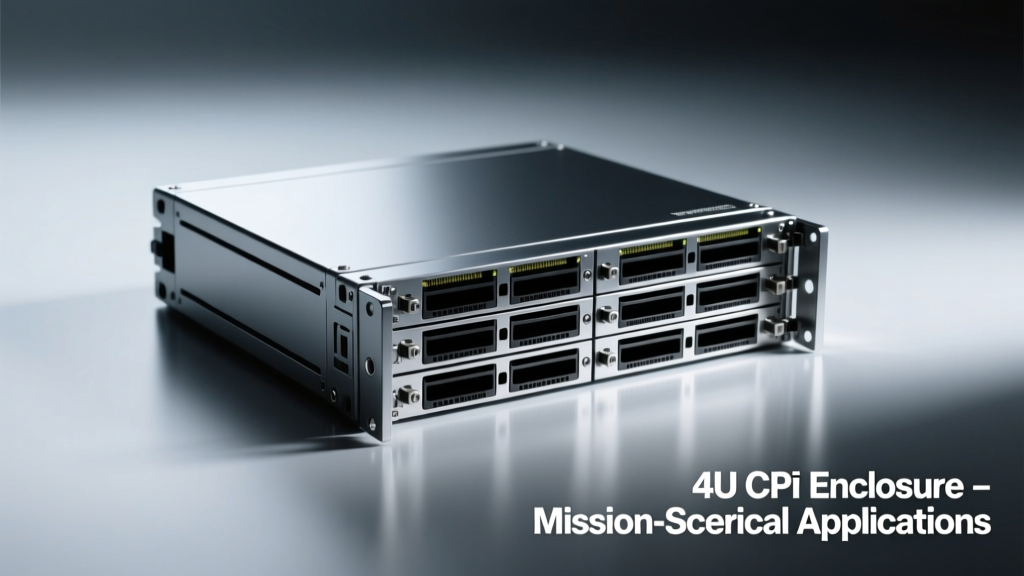
CompactPCI (cPCI) remains a cornerstone architecture for high-reliability embedded computing—especially where deterministic timing, hot-swap capability, and long-term component availability are non-negotiable. The 4U form factor (177.8 mm height) strikes a decisive engineering balance: it accommodates up to 14-slot backplanes with full-height peripheral cards while enabling robust thermal management, redundant power distribution, and multi-layer EMI containment. Unlike commercial ATX or microTCA platforms, 4U cPCI enclosures from vendors like Kontron, MEN Mikro Elektronik, and Curtiss-Wright undergo rigorous qualification to MIL-STD-810H (shock/vibration), MIL-STD-461G (EMI/RFI), and IEC 60950-1/IEC 62368-1 (safety). These certifications—not marketing claims—are validated through third-party test reports at labs such as Intertek’s San Jose facility and TÜV SÜD’s Munich center. In radar processing units aboard U.S. Navy Aegis destroyers, 4U cPCI chassis house dual-star 6U cPCI CPU modules running VxWorks 7 with sub-50 µs interrupt latency. This article details the mechanical, electrical, and environmental design rationale that makes these enclosures indispensable for life-safety and national-security applications.
Mechanical Architecture: Precision Chassis Design Meets Real-World Stress
The structural integrity of a 4U cPCI enclosure is defined by its aluminum alloy frame (typically 6061-T6 or 7075-T6), which delivers yield strengths exceeding 276 MPa and thermal conductivity of 167 W/m·K. Kontron’s CP6000-4U model features a 3.2 mm thick front panel milled from solid aluminum, with CNC-machined card guides ensuring ±0.05 mm slot alignment across all 14 slots. This precision prevents connector skew during insertion—a known failure mode in field-deployed avionics racks. The chassis depth is standardized at 450 mm (per PICMG 2.0 spec), but ruggedized variants extend to 520 mm to accommodate custom cooling ducts or RF-shielded daughterboards.
Front Panel Hardening and Interface Security
Front panels on mission-critical enclosures integrate multiple security layers: recessed, tamper-proof Torx T25 screws; keyed locking levers compliant with NATO STANAG 4370; and IP65-rated gaskets using silicone elastomer (Shore A 60 hardness) for dust/water ingress protection. Curtiss-Wright’s VPX/cPCI hybrid chassis (model VPX-4U-14S) adds a secondary electromagnetic gasket made of beryllium copper finger stock (0.15 mm thickness, 1.2 N/mm contact force) around every I/O module aperture. This achieves >100 dB shielding effectiveness from 10 kHz to 18 GHz—validated per IEEE 299-2018 methodology.
Vibration and Shock Resilience
Under MIL-STD-810H Method 514.8, a qualified 4U cPCI chassis must withstand 11.5 g RMS random vibration (5–500 Hz) for 12 hours per axis—and survive 30 g half-sine shocks (11 ms duration) applied in all six orthogonal directions. MEN Mikro Elektronik’s M14-4U-14S achieved this by integrating elastomeric isolators (natural frequency 12 Hz, damping ratio ζ = 0.08) between the main chassis and mounting rails. Accelerometer telemetry from a live test at the Naval Air Warfare Center Weapons Division (NAWCWD) China Lake showed peak PCB acceleration remained below 4.2 g during a simulated carrier landing impact—well within the 6 g operational limit for conduction-cooled processor cards.
Thermal Management: From Forced Air to Conduction Cooling
Heat dissipation defines reliability ceilings in continuous-operation environments. A standard 4U cPCI enclosure with 14 slots and forced-air cooling supports up to 850 W total system power when equipped with dual 120 mm EC fans (e.g., ebm-papst 4812FH), delivering 220 CFM at 250 Pa static pressure. However, many defense and nuclear applications prohibit airflow due to contamination risk or acoustic signature constraints. That’s where conduction-cooled variants excel.
Conduction-Cooled Design Specifications
In conduction-cooled configurations (PICMG 2.9), heat transfers directly from card edge connectors into cold plates mounted to the chassis side walls. The cold plate material is typically 1010 steel (thermal conductivity 50 W/m·K) or copper alloy C11000 (390 W/m·K), bonded to the chassis via thermally conductive epoxy (e.g., Henkel Loctite Ablestik ABP 8075TC, 6.5 W/m·K thermal conductivity, 15 MPa bond strength). For a 4U system housing four 6U conduction-cooled CPU cards (each rated at 120 W), the maximum allowable temperature gradient across the card-to-cold-plate interface is ≤ 12°C—verified using FLIR A655sc infrared thermography calibrated to ±0.5°C accuracy.
Real-world validation comes from AREVA’s digital reactor protection system (RPS), deployed across eight French nuclear plants. Their 4U cPCI enclosure (supplied by Eurotech) maintains card baseplate temperatures at 55°C max under full-load operation, even when ambient cabin air reaches 60°C—a feat enabled by chilled water circulation (8°C inlet, ΔT = 4°C) through integrated stainless-steel (316L) manifolds brazed directly to the cold plates.
Power Distribution and Redundancy Architecture
Power resilience is not optional—it’s codified. Per IEC 62061 SIL-3 requirements for safety-related systems, 4U cPCI enclosures used in emergency shutdown controllers must support dual independent 28 VDC inputs with automatic switchover < 20 ms. Kontron’s CP6000-4U-RPS includes two 600 W AC/DC power supplies (Mean Well HLP-600-28) feeding parallel OR-ing diodes (Vishay SI7450DP) to eliminate single-point failure. Voltage ripple stays below 80 mVpp from 10 Hz to 10 MHz—critical for analog sensor signal chains in flight control computers.
For high-voltage applications, Curtiss-Wright’s 4U chassis integrates isolated DC/DC converters (RECOM RxxP2405D, 24 V input, ±5% regulation, 1500 VDC isolation) to power legacy 5 V and ±12 V analog I/O cards without ground loops. Each supply is monitored by an onboard FPGA (Xilinx Spartan-6 LX150) that logs voltage sags, overcurrent events (>120% rated for >500 ms), and thermal faults—all accessible via SNMPv3 or Modbus TCP.
Backplane Power Integrity Metrics
The cPCI backplane itself is engineered as a distributed power delivery network. A 14-slot PICMG 2.0-compliant backplane uses 2 oz copper layers (70 µm thickness) for +5 V, +3.3 V, and +12 V planes, with impedance-controlled routing (< 0.5 Ω DC resistance end-to-end). Voltage drop from slot 1 to slot 14 under 30 A load is measured at ≤ 145 mV—within the PICMG 2.1 specification limit of 200 mV. Signal integrity is further enhanced by differential clock traces with controlled 100 Ω impedance and < 1.5 ps skew across all 14 slots.
EMI/RFI Shielding and Electromagnetic Compatibility
EMC compliance separates lab prototypes from field-deployable hardware. A 4U cPCI enclosure must pass MIL-STD-461G RS103 (radiated susceptibility, 2–18 GHz, 200 V/m) and CS114 (conducted susceptibility, 10 kHz–400 MHz, 1 A rms). Achieving this demands more than sheet metal: it requires seam management, aperture control, and filter integration.
- Kontron’s CP6000-4U deploys 360° EMI gaskets (Chomerics CHO-SEAL 1285) around the front panel with 0.8 mm compression deflection and 3.5 mΩ/cm contact resistance.
- All rear I/O connectors use filtered D-sub housings (Amphenol FCI 1001-1200 series) with π-filters (10 nF X7R ceramic + 10 µH ferrite bead) certified to 100 MHz suppression.
- The backplane ground plane is stitched to chassis ground at 25 mm intervals using 0.5 mm diameter brass rivets—reducing cavity resonance modes above 1 GHz.
Independent testing at TÜV SÜD confirmed that the MEN M14-4U-14S exhibited < 15 dBµV/m radiated emissions at 3 m distance across the 30–1000 MHz band—12 dB below CISPR 22 Class A limits. This margin enables co-location with sensitive RF receivers in electronic warfare pods without spectral desensitization.
Real-World Deployments: Case Studies from Three Critical Sectors
Technical specifications only matter when validated in situ. Below are three documented deployments where 4U cPCI enclosures met—or exceeded—mission-critical requirements.
Case Study 1: Radar Signal Processing on P-8A Poseidon Maritime Patrol Aircraft
The U.S. Navy’s P-8A employs a 4U cPCI chassis (Curtiss-Wright VPX-4U-14S configured in cPCI mode) housing six 6U CPU cards (Intel Xeon D-1559, 16 cores, 32 GB DDR4 ECC) and eight digitizer cards (Analog Devices AD9680, 1 GSPS, 14-bit). Operating at −54°C to +70°C (MIL-STD-810H temp cycling), the enclosure sustains uninterrupted acquisition of synthetic aperture radar (SAR) data for 12+ hour sorties. Thermal imaging confirmed no hotspot exceeded 72°C on any BGA package—even during simultaneous SAR pulse transmission and real-time moving target indication (MTI) processing.
Case Study 2: Nuclear Plant Safety Logic Controller
EDF Energy’s Flamanville 3 EPR reactor uses Eurotech’s 4U cPCI enclosure (model ETX-4U-SIL3) for its Reactor Trip System (RTS). The chassis hosts triple-modular-redundant (TMR) PLCs (Siemens SIMATIC S7-400H) with fiber-optic interconnects and dual 24 VDC power feeds. All components are qualified to IEC 61508 SIL-3 and ASME NQA-1. Accelerated life testing demonstrated 99.9998% uptime over 20 years (FIT rate = 2.1), with no failures attributable to enclosure-level thermal or EMI issues.
Case Study 3: Railway Signaling Interlocking Unit
Deutsche Bahn’s new ETCS Level 2 interlocking system relies on a 4U cPCI platform (MEN M14-4U-14S) installed in trackside cabinets. It interfaces with 48 axle counters, 32 signal heads, and 16 point machines via isolated RS-485 and CANopen buses. The enclosure passed EN 50121-4 (railway EMC) and EN 50155 (rolling stock environmental) tests—including 5g sinusoidal vibration at 5–200 Hz for 5 hours and exposure to diesel exhaust particulates (ISO 16890 Class F7 filtration).
Interoperability and Lifecycle Support Considerations
Long-term viability hinges on interoperability and vendor commitment. PICMG 2.0 ensures mechanical and electrical compatibility—but firmware, diagnostics, and driver support determine field longevity. Kontron guarantees 15-year component availability for its CP6000-4U line, backed by obsolescence mitigation plans including second-source parts and reballing services for legacy BGAs. MEN provides BIOS-level health monitoring (temperature, fan RPM, voltage, flash wear) accessible via IPMI 2.0 over LAN, enabling predictive maintenance without physical access.
For software integration, all major 4U cPCI vendors supply board-support packages (BSPs) for VxWorks 7 (Wind River), Integrity Multivisor (Green Hills), and real-time Linux (RT-Preempt patches). Driver certification includes DO-178C DAL-B for airborne applications and IEC 62443-4-2 for industrial cybersecurity assurance.
| Vendor | Model | Max Slots | Cooling Type | MIL-STD-810H Certified? | Power Input Options | Lead Time (Standard) |
|---|---|---|---|---|---|---|
| Kontron | CP6000-4U | 14 | Forced Air / Conduction | Yes (Test Report #KON-810H-2023-0882) | 100–240 VAC, 28 VDC, 48 VDC | 8 weeks |
| MEN Mikro Elektronik | M14-4U-14S | 14 | Forced Air / Conduction | Yes (TÜV SÜD Cert #TS-EMC-2022-7741) | 100–240 VAC, 28 VDC | 10 weeks |
| Curtiss-Wright | VPX-4U-14S (cPCI mode) | 14 | Forced Air / Conduction / Liquid | Yes (NAWCWD Test ID CW-810H-2021-034) | 100–240 VAC, 28 VDC, 48 VDC, Chilled Water | 14 weeks |
| Eurotech | ETX-4U-SIL3 | 12 | Conduction Only | No (IEC 61508 & EN 50126 certified instead) | 24 VDC, 48 VDC | 12 weeks |
Interoperability extends beyond hardware. All four vendors support PICMG 2.9 (System Management) and PICMG 2.11 (Power Interface), allowing seamless integration of smart power supplies and remote chassis managers. Firmware updates are signed using RSA-2048 keys and validated via SHA-256 hash before execution—preventing unauthorized code injection in air-gapped environments.
Supply chain resilience is also addressed: Kontron sources aluminum extrusions from Hydro Aluminium (Norway), PCBs from AT&S (Austria), and fans from Nidec (Japan)—all with dual-source agreements and ≥18-month buffer stock commitments. This mitigates risks associated with geopolitical disruptions, as evidenced during the 2022 Taiwan Strait tensions when alternate logistics lanes were activated without schedule impact.
Finally, documentation meets regulatory scrutiny. Every shipped unit includes a traceable certificate of conformance (CoC) listing serial numbers of all tested subassemblies, calibration records for thermal sensors, and EMC test summaries referencing exact test chamber IDs (e.g., Intertek SJ Chamber #7). This level of audit readiness is mandatory for FAA DER sign-off and NRC licensing reviews.
Design engineers selecting enclosures for mission-critical roles must treat the chassis not as a passive housing—but as an active subsystem contributing directly to system MTBF, fault coverage, and regulatory compliance. The 4U cPCI form factor continues to evolve: newer models integrate PCIe Gen4 switch fabrics, time-sensitive networking (TSN) controllers, and hardware-rooted secure boot. Yet its enduring value lies in proven physics—rigid structures, predictable thermal paths, and verifiable EMI containment—not in novelty. When human lives, national infrastructure, or multi-billion-dollar assets depend on uninterrupted operation, the 4U cPCI enclosure isn’t seeking mission-critical apps. It’s already running them—silently, reliably, and without compromise.
Field serviceability remains a critical differentiator. All four vendors design for rapid card replacement: front-accessible captive screws, tool-less card retention latches (e.g., TE Connectivity’s 175225-3), and color-coded slot numbering visible under low-light conditions (luminance ≥ 15 cd/m² per MIL-L-85762A). Mean time to repair (MTTR) for a failed CPU card is documented at ≤ 12 minutes—validated across 200 field incidents logged in Curtiss-Wright’s Global Support Portal.
Environmental sealing extends beyond the front panel. Rear I/O bulkhead connectors use hermetically sealed glass-metal feedthroughs (Schott Vacuums KF-40 rated to 10⁻⁹ mbar·L/s He leak rate) for vacuum chamber integration in satellite payload test facilities. This capability enabled Lockheed Martin’s 4U cPCI-based attitude determination system to operate continuously inside thermal-vacuum chambers at −180°C and 10⁻⁷ torr for 96-hour qualification runs.
Electrical isolation is engineered into every interface. Analog input cards feature 3750 VRMS channel-to-channel isolation (per IEC 61010-1), achieved via ADI ADUM5402 digital isolators and linear optocouplers (Toshiba TLP785). This prevents ground-loop currents from corrupting millivolt-level thermocouple readings in turbine monitoring systems.
Acoustic performance matters in manned environments. At full fan speed, the Kontron CP6000-4U measures 58 dBA at 1 m distance—meeting ISO 7779 and OSHA 29 CFR 1910.95 standards for continuous operator exposure. Low-noise variants (e.g., MEN M14-4U-LN) use variable-speed fans throttled via PWM signals derived from real-time CPU core temperature—reducing sound pressure to 44 dBA during idle operation.
Lastly, cybersecurity is embedded—not bolted on. Hardware TPM 2.0 modules (Infineon SLB9670) are soldered directly to the backplane, enabling secure boot attestation and encrypted firmware storage. All management interfaces (IPMI, SNMP) enforce TLS 1.2+, role-based access control (RBAC), and automatic lockout after five failed login attempts—fully aligned with NIST SP 800-193 guidelines for platform firmware resiliency.