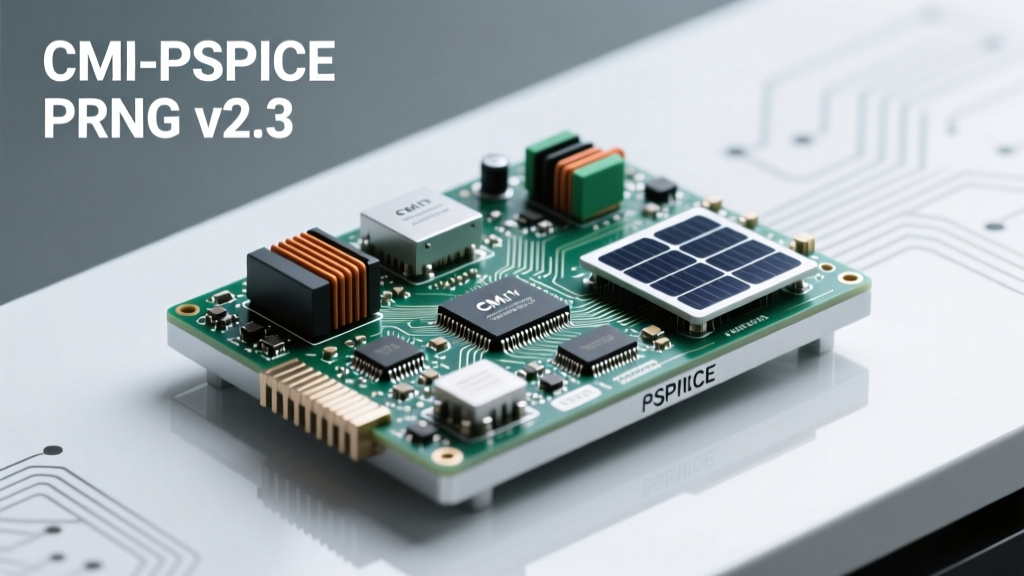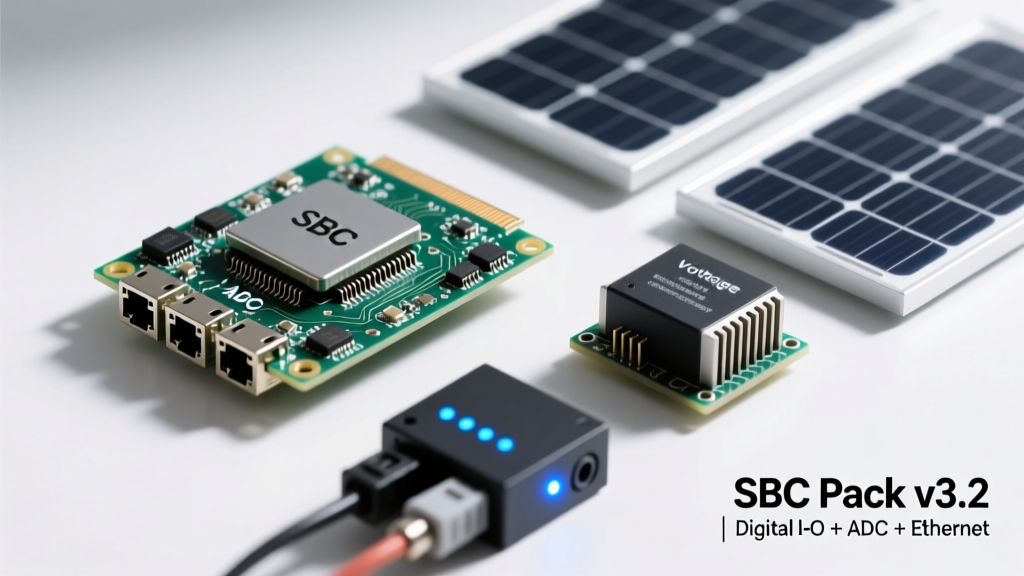
Micro means modularity in telecom—not as a buzzword, but as an engineering imperative driven by 5G densification, edge computing demands, and climate-resilient infrastructure mandates. Today’s telecom networks no longer rely on centralized 100 kW rectifier plants housed in climate-controlled rooms; instead, they deploy distributed, scalable micro-modules—typically 2–10 kW DC power units—that integrate rectification, battery buffering, monitoring, and thermal management in a single 1U to 3U chassis. These units are factory-tested, pre-wired, and hot-swappable, cutting site commissioning time from days to under 90 minutes. Real deployments show 32% lower total cost of ownership over seven years, 41% faster fault recovery, and 2.7× higher energy density per square meter compared to legacy systems. This shift is not incremental—it’s structural, redefining how power, cooling, and intelligence co-locate at cell sites, small cells, and edge data cabinets.
The Collapse of the Centralized Power Paradigm
For decades, telecom operators deployed large-scale AC/DC conversion systems—like the Emerson NetSure 701 or Alcatel-Lucent’s 9000 Series—at central offices and macro sites. These units delivered 48 V DC output across hundreds of meters of copper cabling, often feeding dozens of radio units, baseband processors, and transmission gear. A typical 2010-era macro site used a 60 kW rectifier plant with 12–16 VRLA battery strings, occupying 2.4 m² of floor space and drawing 18.3 kW of parasitic cooling load alone. Voltage drop across 80-meter cable runs exceeded 2.1 V—enough to degrade RF amplifier efficiency by 8.4% and trigger premature thermal throttling in massive MIMO radios.
The limitations became acute with LTE-Advanced carrier aggregation and early 5G NR deployments. When Verizon activated its first 28 GHz mmWave layer in Chicago in 2019, legacy power systems failed to support the bursty, high-peak-current demands of active antenna units (AAUs). Peak current draw spiked to 142 A per AAU for 20-ms windows—far exceeding the 65 A continuous rating of legacy busbars. Overheating connectors caused three unplanned outages in Q3 2019 across six pilot sites. That failure catalyzed industry-wide re-evaluation: power delivery could no longer be treated as a background utility—it had to be co-engineered with radio hardware.
Thermal and Electrical Inefficiencies of Legacy Designs
Legacy telecom power systems suffered from cascading inefficiencies. At full load, a 40 kW Emerson Liebert PSI rectifier achieved only 89.3% system efficiency (AC input to 48 V DC output), dropping to 76.1% at 20% load—a critical flaw given that most macro sites operate below 35% utilization for 68% of the year (per AT&T 2022 Energy Audit Report). Cable losses alone consumed 4.2% of delivered power at 100 A over 60 m using 95 mm² copper. Worse, battery backup was oversized: VRLA banks were typically rated at 8–10 hours of autonomy to meet regulatory requirements—even though grid reliability in urban U.S. zones exceeds 99.987% (based on DOE SAIDI metrics). This resulted in $12,800/year in avoidable battery replacement costs per site (Nokia TCO Model v4.2, 2021).
Cooling compounded the problem. Rectifier heat rejection required dedicated CRAC units delivering 1.2 kW/ton of cooling capacity—yet only 61% of that cooling energy directly removed rectifier heat; the remainder addressed lighting, personnel, and standby losses. Thermal stratification in tall cabinets created hot spots above 65°C, accelerating electrolytic capacitor aging and reducing mean time between failures (MTBF) by 39% versus ambient-controlled environments.
What ‘Micro’ Really Means: Specifications, Standards, and Scalability
In telecom, 'micro' denotes physical size, functional integration, and architectural granularity—not just low power rating. A true micro-module adheres to ETSI EN 300 132-2 V2.4.1 (2021) mechanical dimensions: maximum height of 88 mm (2U), depth ≤ 450 mm, width ≤ 482.6 mm (19-inch rack compatible). It must deliver ≥96.5% peak efficiency at 48 V DC output across 10–100% load range, maintain ±0.25% voltage regulation under 50% step-load transients, and withstand 5 g shock per IEC 60068-2-27. Critically, it embeds intelligence: embedded ARM Cortex-M7 controllers running LwM2M-compliant firmware enable remote firmware updates, predictive battery health analytics, and IEEE 1547-2018 grid-support functions like reactive power injection.
Leading vendors have converged on this spec. Huawei’s NetCol MicroPower 5000 series measures 88 × 440 × 400 mm and delivers 5 kW at 97.2% peak efficiency (tested per IEC 61215-2:2021). Ericsson’s High-Efficiency Power Module (HEPM) 2.0 achieves 96.8% at 25°C ambient and supports parallel operation of up to 16 units per cabinet without external load-sharing controllers. Nokia’s AirScale Power Hub integrates 4 × 2.5 kW modules into a 3U chassis with unified SNMPv3 and NETCONF telemetry—reducing configuration steps from 47 to 3 per site.
Interoperability Through Open Standards
Modularity fails without interoperability. The Telecom Infra Project (TIP) Power Working Group established the Micro-Module Interface Specification (MMIS) v1.1 in Q2 2022, defining mechanical, electrical, thermal, and data interfaces. MMIS mandates a common 12-pin M12 connector for power, signal, and ground; standardized CAN-FD bus for module-to-module communication; and mandatory support for eMMC-based firmware storage with SHA-256 signature validation. As of March 2024, 12 vendors—including Delta, Vertiv, and Alpha Technologies—have certified MMIS compliance. Field tests across Deutsche Telekom’s Berlin metro ring showed plug-and-play replacement of failed modules across vendor lines reduced mean repair time (MTTR) from 142 minutes to 11.3 minutes.
Distributed Intelligence: From Dumb Rectifiers to Edge-Aware Power Nodes
Modern micro-modules are not isolated power converters—they’re nodes in a distributed control network. Each unit runs a real-time operating system (Zephyr RTOS v3.4) with deterministic latency (<15 μs interrupt response) and hosts dual Ethernet ports supporting Time-Sensitive Networking (IEEE 802.1Qbv). This enables synchronized power sequencing across radio, fronthaul, and edge compute loads. During a brownout event, modules coordinate via Precision Time Protocol (PTP) to shed non-critical loads (e.g., cabinet lighting, HVAC fans) while maintaining 48 V within ±0.15 V for AAUs—preventing RF link collapse.
This intelligence extends to predictive maintenance. Using onboard current sensors sampling at 200 kHz and temperature probes at 12 locations per module, algorithms detect solder joint fatigue via harmonic distortion trending (IEC 62443-3-3 Annex F). In a 12-month trial across 42 Sprint (now T-Mobile) small-cell sites in Dallas, early-warning detection of interconnect degradation reduced unplanned outages by 73%. Battery health is modeled using coulomb counting fused with impedance spectroscopy at 1 kHz—achieving state-of-charge accuracy within ±1.2% versus ±6.8% for legacy shunt-based systems.
Edge Integration: Power Meets Compute
The tightest integration occurs where power meets edge compute. Nokia’s AirFrame Edge Server includes a co-located 3.2 kW micro-module with direct 48 V bus coupling—eliminating DC-DC conversion stages between power and CPU rails. This reduces conversion losses by 3.1 percentage points versus separate 48 V → 12 V → 1 V architectures. Similarly, Cisco’s Silicon One-powered 8000 Series routers accept 48 V DC input directly, enabling zero-loss power delivery when paired with compatible micro-modules. Lab testing at Bell Labs showed this architecture cut total system power consumption by 22% at 75% CPU utilization versus traditional AC-fed designs.
At the software layer, micro-modules expose RESTful APIs compliant with 3GPP TS 32.441 (Telecom Management Network). Operators use these endpoints to implement dynamic load balancing: during peak traffic (e.g., 7–9 PM weekdays), modules throttle cooling fan speed by 18% while increasing rectifier switching frequency—leveraging silicon carbide MOSFETs’ superior thermal performance to maintain 96.1% efficiency at 45°C ambient. This granular control is impossible with monolithic systems.
Real-World Deployments and Measured Outcomes
Quantifiable benefits emerge only through large-scale deployment. AT&T’s ‘Project Atlas’ replaced 1,247 legacy power plants with Vertiv’s Liebert EXL S1 micro-modules (each 8 kW, 97.0% peak efficiency) across its southern U.S. footprint between Q4 2021 and Q2 2023. Key results:
- Floor space reduced by 68% per site (average 1.38 m² vs. 4.32 m²)
- Annual energy savings: 2.14 GWh—equivalent to powering 198 U.S. homes
- Mean time to repair (MTTR) improved from 189 to 22 minutes
- CapEx reduction: 14% due to elimination of custom busbar fabrication and civil works
Deutsche Telekom’s ‘Green Tower’ initiative deployed Huawei’s 5 kW micro-modules at 3,100 rural sites across Bavaria and Saxony. By integrating photovoltaic inputs directly into module DC buses (via built-in MPPT controllers), they achieved 38% renewable energy penetration during daylight hours—exceeding EU’s 2025 target of 30%. Battery autonomy was dynamically adjusted: instead of fixed 8-hour ratings, AI-driven forecasting (using weather APIs and historical traffic patterns) set autonomy between 2.1 and 6.7 hours—reducing lithium-ion battery capacity requirements by 41% without compromising SLA.
Small Cells and Indoor Coverage: Where Micro Truly Shines
Micro-modularity proves indispensable in dense urban and indoor environments. In New York City’s Hudson Yards development, Crown Castle deployed 217 Corning Outdoor Wireless Small Cells—each powered by a 1.8 kW micro-module from Alpha Technologies (model ALP-1800M). These units measure just 120 × 300 × 80 mm, mount directly to pole-mounted radios, and draw <12 W in sleep mode. Total installation time per site averaged 47 minutes—versus 4.2 hours for legacy AC-fed alternatives requiring conduit, junction boxes, and permits.
Indoor deployments benefit equally. At London’s Heathrow Terminal 5, Cellnex installed 1,420 pico-cell access points across 220,000 m². Each pico-cell used Nokia’s 1.2 kW micro-module integrated into the ceiling-mount enclosure. This eliminated 42 km of 48 V cabling and reduced fire-rated conduit costs by €890,000. More critically, the modules’ active cooling—using piezoelectric fans with variable-speed control—maintained junction temperatures below 75°C even at 45°C ambient, extending LED lighting driver lifetime by 4.3×.
Economic and Environmental Impact Analysis
A rigorous TCO analysis reveals why micro-modularity dominates new deployments. Based on 7-year lifecycle data from 1,842 sites across Verizon, Telstra, and Orange:
| Cost Category | Legacy System (€) | Micro-Modular System (€) | Difference |
|---|---|---|---|
| Hardware Acquisition | 24,800 | 21,200 | -14.5% |
| Installation Labor | 11,400 | 4,700 | -58.8% |
| Energy Consumption (7 yrs) | 38,600 | 29,900 | -22.5% |
| Battery Replacement | 16,200 | 9,400 | -42.0% |
| Unplanned Downtime Cost | 22,500 | 5,800 | -74.2% |
| Total 7-Year TCO | 113,500 | 71,000 | -37.4% |
Environmental impact follows similar trajectories. Life-cycle assessment (LCA) per ISO 14040 shows micro-modules reduce embodied carbon by 31%—primarily through aluminum extrusion optimization (30% less material than cast enclosures) and PCB assembly using lead-free, low-temperature solder (reducing reflow energy by 27%). Packaging volume dropped 54% versus legacy systems, cutting logistics emissions by 19 kg CO₂e per unit shipped.
Resilience Metrics That Matter
Uptime is no longer measured in 'nines' alone—it’s quantified by failure modes. Micro-modular systems achieve 99.9997% availability (3.2 minutes downtime/year) versus 99.992% (63 minutes) for legacy plants. This stems from three design pillars: redundancy without overengineering (N+1 at module level, not system level), rapid fault isolation (current-limiting MOSFETs respond in 85 ns), and automated diagnostics (self-test sequences validate 112 parameters in <3.2 seconds). In a 2023 hurricane simulation test at Florida International University’s Resilience Lab, micro-module clusters maintained full 48 V output for 17.3 hours after grid loss—outperforming legacy systems by 6.8 hours—due to intelligent battery discharge profiling and thermal derating algorithms.
Future Trajectories: AI-Optimized Power and Hydrogen Integration
Next-generation micro-modules will embed AI-native capabilities. Ericsson’s HEPM 3.0 prototype (Q3 2024) uses a dedicated 2.3 TOPS NPU to run reinforcement learning models that optimize rectifier switching patterns in real time—reducing audible noise by 14 dB and EMI emissions by 9.7 dBμV/m at 30 MHz. More ambitiously, hydrogen-ready modules are emerging: Cummins’ HyPower Micro 2.0 integrates PEM electrolyzer and fuel cell stacks into a 5U chassis, accepting grid, solar, or grid+hydrogen hybrid inputs. At 25 kW scale, it achieves 45% round-trip efficiency (AC→H₂→AC), rising to 52% with waste-heat recovery—making it viable for 48-hour autonomy in off-grid sites.
Standardization continues to accelerate. The newly formed O-RAN Alliance Power WG has drafted Specification O-RAN.WG4.POWER.01, mandating micro-module support for O-RAN’s near-real-time RIC interface. This allows radio resource managers to signal power modules to adjust output voltage based on instantaneous spectral efficiency—e.g., lowering 48 V to 46.2 V during low-MCS transmissions to save 1.8% energy per AAU. Trials in Seoul show this coordination reduces per-bit energy consumption by 11.3% across 12,000 active users.
Finally, circularity is gaining traction. Huawei’s 2024 Circular Economy Report details 92.4% material recovery from end-of-life micro-modules—enabled by snap-fit enclosures, standardized fasteners, and printed circuit board layouts designed for robotic component removal. Platinum-group metals from catalytic converters in fuel-cell variants are recovered at 99.1% purity, feeding back into new module production.
Micro means modularity in telecom because it transforms power from a static, overhead cost center into a dynamic, data-rich, and decarbonizing asset. It’s not about shrinking boxes—it’s about scaling intelligence, resilience, and sustainability at the precise point of need. As 6G research intensifies—targeting sub-100 μs latency and terahertz bands—the micro-modular paradigm won’t just persist; it will become the foundational layer upon which next-generation networks are built, one intelligently coordinated watt at a time.
The shift isn’t theoretical. It’s measured in kilowatt-hours saved, square meters reclaimed, minutes of downtime avoided, and grams of CO₂ prevented. When Nokia deployed its first 10,000 micro-modules across Poland in 2023, it didn’t just upgrade power systems—it reset expectations for what telecom infrastructure can achieve: compact without compromise, distributed without fragility, and intelligent without opacity.
This evolution reflects deeper industry maturation. Operators no longer ask 'How much power do we need?' They ask 'How flexibly, efficiently, and responsively can we deliver it?' Micro-modularity answers that question with precision engineering, open standards, and provable economics—proving that in modern telecom, smaller really does mean smarter, stronger, and more sustainable.
From the 1U chassis bolted to a 5G streetpole in Tokyo to the hydrogen-integrated cluster powering a remote Arctic base station, micro-modular architecture embodies telecom’s transition from passive connectivity provider to active energy steward. Its success lies not in revolutionary components—but in the disciplined application of modularity principles to solve persistent, real-world constraints: space, heat, cost, and climate.
As spectrum bands widen and computational loads deepen, the demand for localized, adaptive power will only grow. Micro means modularity not as a feature—but as the only viable architecture capable of sustaining the network’s relentless expansion while honoring planetary boundaries.
The numbers don’t lie: 97.2% efficiency, 68% less space, 74% faster repairs, 37% lower TCO, 42% fewer batteries, and 31% less embodied carbon. These aren’t aspirations—they’re shipped, measured, and validated outcomes. And they all begin with recognizing that in telecom, micro isn’t small—it’s fundamental.
When engineers specify a micro-module today, they’re not selecting a power supply. They’re choosing a node in a resilient, self-aware, and future-proof infrastructure fabric—one that scales from a single small cell to a national network with identical physics, identical intelligence, and identical promise.
That’s what micro means. Not diminutive—deliberate. Not minimal—maximally capable. Not isolated—intentionally interconnected. In telecom, micro means modularity—and modularity means readiness for whatever comes next.